

Isiah Emmanuel Morter
Knight Commander of the Distinguished Service Order of Ethiopia. He was born in Belize formerly British Honduras Central America/Caribbean.He was a member and staunch supporter of the Universal Negro Improvement Association U.N.I.A..SIr Isaiah Morter was the first great benefactor of the cause of African Redemption.He made the largest single monetary donation to the U.N.I.A and also bequeathed land in Belize to the U.N.I.A. that was seized by the British Crown for example KEY CHAPEL IN BELIZE WAS GIVEN TO THE U.N.I.A.ALSO THE BLCK CROSS NURSES WAS FORMED IN BELIZE!!!
Isiah Emmanuel Morter
Knight Commander of the Distinguished Service Order of Ethiopia.


Bob Reneau
Belize's well known choreographer and composer, and also a radio announcer, had sought early retirement from his job at Radio Belize for political reasons. Adding that his Baha'i religion did not allow him to go into details. Bob's early years, had wrote many plays and choreographed many local dances.
~~ The WEB ~~~
1978
Lord Rhaburn Combo
1978
Rhaburn's
"Sparrow"
1978
Luis Peyrefitte
1977
Euloid Henderson
Belizean Otis Redding
1977
Zoila Clark
1976 Old Maestro
"Chuchin Acosta"
composer of the national hit song "Tribute to the Baymen" and recognized maestro of the flute and saxophone. Chuchin, in 1976 formed his second flute band , made up of youths, age 7 to 14 yr. and named it Chuchin Acousta Flute Band. In 1944 he started a flute band which had swelled to 100 in a few weeks.
1978
Sam Adolphus,
one of Belize's leading pianist at 56 years. Sam made his public appearance at the age of two years at Wesley Bazaar. His opening rendition "It ain't Gonna Rain No More."
Adolphus had his first jazz band when he was 16, and did tours in Honduras, Mexico, Panama, Guatemala and U.S.A. As a songwriter, he was able to composed more than 30 popular songs. He and his band backed up such stars as Harry Belafonte, Billy Ecksstine and Tony Bennett.
Sam finally gave up club gigs, and became the church organist for an Adventist Church in Miami.
Isabel Flores
goes to Hollywood, California.
It was a historic day on Nov. 14th 1978, when the Garifuna Settlement Day Committee of Los Angeles, and almost a hundred well-wishers welcome Mr. Flores "master drummer" from Dangriga, at the Los Angeles International Airport. Mr. Flores attended Mass on the Saturday morning at St. Michael's Church on Manchester Ave. The Mass was officiated by Father Oswald Reyes. The congregation ended the mass on a high note chanting the chorus of "Lanigee Bime "The Celebration Dance was held at the Elks Hall in Hollywood.
~~~ BERNARD NELSON ~~~El Paso Herald Post, Sunday
May 19, 1974
Bernard Nelson
TOP'S LEADER
The musical magic of Bernard Nelson continues nightly except Sunday from 8:30 p.m. at the Holiday Inn, Downtown's top O' the Inn.
Nelson, talented vocalist-organist and leader of The Barons duo, is a native of British Honduras who has also lived in Mexico City. His smooth way with a song and mastery of the the keyboard make him one of the most engaging entertainers currently appearing on the border. Larry Battle ably assist on drums and vocals.
Mr. Fellpe Morales
Music is more than the art of combining sounds in rhythmic, melodic and harmonic forms. It is a universal language. It lacks the words of a spoken language yet instills in people sentiments that words fail to describe.
The first forms of music perhaps consisted of cries, shouts or even ritual expressions. The early man was quick to realize that a melody can give words more mean. One important aspect of past musical traditions is that we not only learn about the music, but of its position in society as well. The marimba music is no exception.
The marimba is made up of 32 to 36 notes. Marimbas vary. Some have only the "white notes" (natural) of the piano while others have a much larger "keyboard" with both the white and black notes (sharp & flat) of the piano. The marimba is played with small, wooden hammers.
The origin of the marimba is not clear. Some say it is of Afro-American origin. Others advocate that it is of Maya or Meso-American Indian origin. What is clear though,-is that the marimba has touched the lives of most Belizeans. Many times we hear our grandparents or great grandparents make nostalgic references to old days when the marimba music once burned the dance floors. Some old folks have even described the marimba as the most loyal companion of "serenaders". Presently, although not as much as 20 years ago, the marimba is still part of religious events and activities related to old customs and traditions. Some of these traditions are still alive, especially in the Toledo and Cayo Districts.
For example, the "deer dance" is still performed in San Antonio, Toledo District. The "deer dance" is the story of a hunter told with the marimba music and performed each year on August 25. On this day a pole is soaped and greased. A prize, usually money, is put on the top and three men are chosen to climb it. The successful person gets the prize.
In San Jose Succotz, there are the "hog head" mañanitas", "quinceaños" and "El Baile de los Mestizos". All of these dances are accompanied by marimba music. And "Las Alboradas" are held around July in the nearby town of Benque Viejo del Carmen, when the town holds its annual fair in honor of its Patron Saint, Our Lady of Mount Carmel.
Then there is "las Posadas" a re-enactment of Saint Joseph and the Virgin Mary searching for a place to stay in Bethlehem during Christmas time. The Benque Viejo community has highly identified itself with the marimba. The town even has a marimba band, "Linda Beliceña" which is owned by Mr. Felipe Morales, who made his first marimba when he was 17. Since then he has been making and selling marimbas.
Mr. Morales natural musical talent enables him to compose his own songs and make modifications to modern ones. He had worked on his own version of "La Lambada". His band plays almost any song, both traditional and modern. "Linda Beliceña" also performs at birthday parties, weddings and also entertained tourist that visited Belize City.
Belize is a country known for its natural wonders, the hospitality of its peace loving people and its rich cultural mix and traditions. There is a need to preserve Belize's culture, traditions and folk songs. The Marimba Music is only one of these.
This article was first published in August 1990 BELIZE TODAY Publication

THE LIFE OF JAZZ MUSICIAN,
CLEVELAND BERRY, 77, CELEBRATED IN PLANCENCIA
Cleveland Berry, 77, one of Belize’s most endeared jazz musicians, known for the hit songs “Hurricane Hattie” and “Good Mawnin, Miss Lady”, lost his battle with cancer on Friday afternoon, July 6, 2012 when he passed away at the Belize Healthcare Partners in Belize City.
Relatives said that Dave Brubeck’s “Take 5,” one of Berry’s favorite jazz tunes, played in the background as his soul went to sleep.
Berry is a longtime Placencia resident and proprietor of Galley’s Restaurant in that village, a venture he and his late wife began more than three decades ago. He was cremated and a service was held at the St. John’s Memorial (Anglican) Church in Placencia today, Monday.
Speaking with Amandala this evening, Julie Berry, one of his six surviving children, reflected on today’s service, saying that it was truly a celebration of his life. The eulogy was delivered by her brother, Cleveland, Jr., and there were Scripture readings by four of Mr. Berry’s grandchildren.

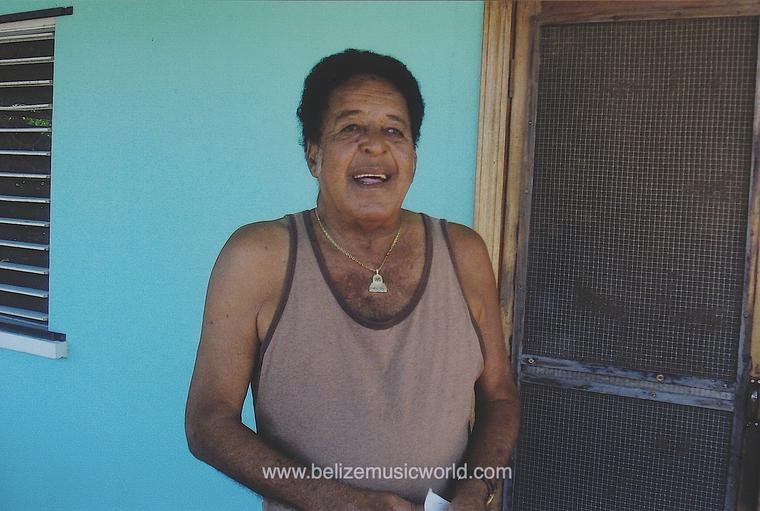

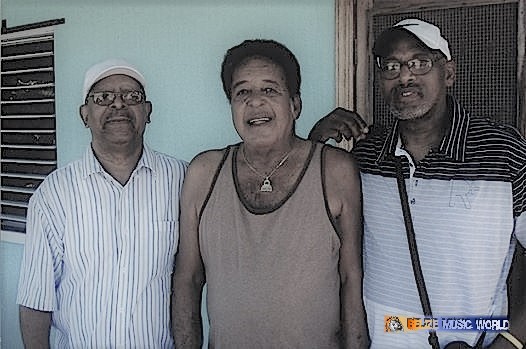
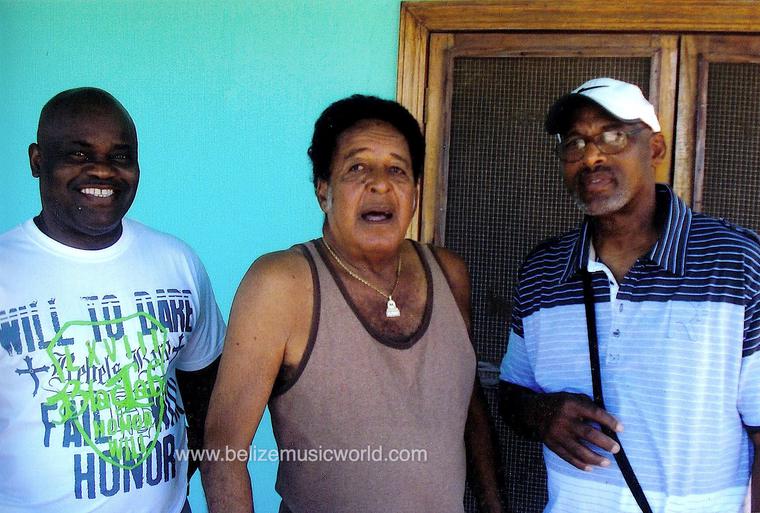
Please e-mail any information, you may have on any Belizean artists
Past or Present

National legend Robert “Bob” Reneau dies
June 1, 2012
The family and friends of the iconic Belizean musician, dance choreographer, playwright and poet, Robert Bob Reneau, Sr., MBE one of the pillars of Belizean expressive arts and culture is preparing to lay him to rest on Saturday. Reneau passed away in Chicago...
1987
Bob Reneau, originally from Belize Central America, sings "let there be peace" - Baha'I
Bernard Nelson
"Nelson Diamond"
Keith Barrow:
How Many Belizeans Knew that the incredible falsetto R&B singer Keith Barrow had Belizean parents. This song stayed on the R&B charts in the U.S. for weeks. I remember when he played at the Castaways Club in Belize City. The guy was a wicked piano player. He jammed up a Fender Rhodes piano. Gone but not forgotten. ........ 'Bilal Morris'
One my favorite Keith Barrow song is "If It's Love You're Looking For". It ranks right up there with Heatwave's "Always and Forever." His father, a Belizean Clyde Barrow, came in the United States via New Orleans in 1939, when he was 14. His mother is an African American Rev. Willie Barrow. They met during WWII, both working in war related industries during the war. They moved to Chicago after the war. In the late 70s the legendary Radio Belize announcer Eddie "Seferino" Coleman met Barrow in Chicago and thereafter played his songs like "Joyful Music" on the station. Sadly, Keith Barrow was one of the first entertainers to die of AIDS in the mid 1980s. ...... 'Gerald Straughan'


DAVID BUDDAN R.I.P
Another Belizean Icon, "GONE HOME TO REST IN PEACE"
Sunrise: Jan18, 1961
Sunset: Dec 27, 2014


April 8th 2020 @ 3:25PM
DoubleBarbara Betson-Anderson is feeling heartbroken.
Hello my facebook family and friends. I'm so numb at this time. The monster that is out there is not one to be playing with, be Safe and careful. That monster came and took my oldest brother 12:42 p.m. today. My brother migrated to the United States in 1962. He is the oldest child for my mother Pearl Domingo Betson. His name is Ivan Domingo "AKA" Shine drummer from the WEB original player of the WEB.my brother is 71 years young.
R.I.P. MY BELOVED BROTHER you will be missed.
Ivan Domingo "AKA" Shine